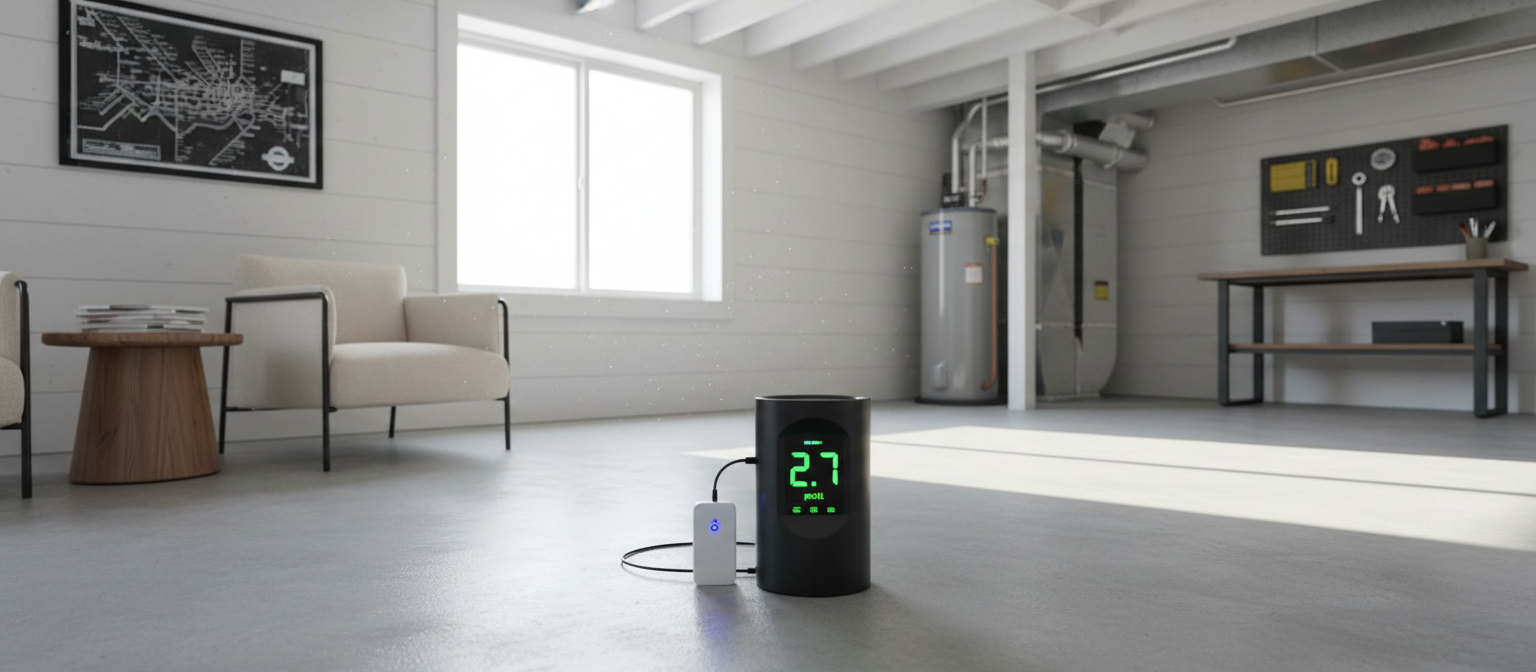
Professional Radon Testing in Columbus Ohio
Protect your family with accurate, EPA-protocol radon testing. Franklin County is a high-risk zone -- find out if your home is safe with certified professionals you can trust.
Why Radon Testing Is Critical for Columbus Homeowners
Radon is a colorless, odorless, radioactive gas that seeps into homes through cracks in foundations, gaps around pipes, and other openings in contact with the ground. It is the second leading cause of lung cancer in the United States, responsible for an estimated 21,000 deaths each year according to the EPA. For homeowners in Columbus and throughout Franklin County, radon testing is not just recommended -- it is essential.
Franklin County falls within EPA Zone 1, the highest-risk designation for radon exposure. This classification means the predicted average indoor radon level exceeds 4.0 pCi/L (picocuries per liter), the threshold at which the EPA strongly recommends corrective action. Local testing data reveals that approximately 60% of homes in the Columbus area have radon levels at or above the EPA action level, making this one of the most radon-prone metropolitan areas in the Midwest.
The geological composition of Central Ohio plays a significant role in elevated radon levels. The region sits atop glacial till deposits rich in uranium-bearing shale and limestone. As uranium in these formations naturally decays, it produces radium, which further decays into radon gas. This gas migrates upward through the porous soil and enters homes through the path of least resistance -- your foundation.
Our Professional Radon Testing Methods
At Columbus Radon Experts, we employ multiple EPA-approved testing methods to provide you with the most accurate assessment of your home's radon levels. Our certified professionals are trained in proper testing protocols and use state-of-the-art equipment to ensure reliable results every time.
Short-Term Radon Testing (2-7 Days)
Short-term testing is the most common initial screening method for radon. These tests typically run for 48 to 96 hours and provide a quick snapshot of your home's radon concentration. We use continuous radon monitors (CRMs) that record hourly readings, giving us a detailed profile of radon fluctuations in your home throughout the testing period.
Short-term tests are ideal for real estate transactions, initial screenings, and situations where you need results quickly. Our CRM devices are tamper-resistant and provide documented chain-of-custody reporting, which is critical for home inspections and property sales. Results are typically available within 24 hours after the testing period concludes.
Long-Term Radon Testing (90+ Days)
Long-term testing provides the most accurate representation of your home's average annual radon level. These tests run for a minimum of 90 days and account for seasonal variations, weather patterns, and changes in how your home is heated and ventilated throughout the year. Long-term tests use alpha track detectors or electret ion chambers that are placed in the lowest livable area of your home.
We recommend long-term testing for homeowners who want the most comprehensive understanding of their radon exposure, particularly after a short-term test shows borderline results between 2.0 and 4.0 pCi/L. The extended testing period smooths out daily and weekly fluctuations, providing a number you can confidently use to make mitigation decisions.
Continuous Radon Monitoring
Our continuous radon monitors (CRMs) represent the gold standard in professional radon testing. These sophisticated electronic devices measure radon concentrations hourly and store the data for comprehensive analysis. Unlike passive devices, CRMs also record temperature, humidity, barometric pressure, and movement -- allowing our technicians to identify any conditions that may have affected the test results.
CRM testing is especially valuable because it reveals radon patterns over time. You may discover that radon levels spike during certain hours, correlating with HVAC system cycles or atmospheric pressure changes. This information helps us design more effective mitigation strategies tailored to your specific home.
What to Expect During Your Radon Test
When you schedule a professional radon test with Columbus Radon Experts, our certified technician will visit your home to assess the best testing location. Following EPA protocols, we place the testing device in the lowest livable area of your home -- typically the basement or ground-floor room that you use regularly. We ensure the device is positioned away from drafts, high humidity areas, and exterior walls for the most representative readings.
Before testing begins, we ask that you maintain closed-house conditions for 12 hours prior to and throughout the testing period. This means keeping windows and exterior doors closed (normal entry and exit is fine) and operating your HVAC system normally. These conditions ensure the test captures your home's true radon level rather than a diluted reading.
After the testing period, we retrieve the equipment and analyze the data. You will receive a comprehensive report that includes your average radon level, hourly readings (for CRM tests), environmental conditions during the test, and our professional recommendations. If your levels exceed 4.0 pCi/L, we will discuss mitigation options and provide a free estimate for remediation.
Radon Testing Costs in Columbus
Professional radon testing in the Columbus area typically ranges from $99 to $150, depending on the testing method and the size of your property. This investment includes professional device placement, certified analysis, a detailed report, and consultation on your results. When you consider that radon-related lung cancer claims thousands of lives annually, the cost of testing is a small price for peace of mind.
Many of our customers choose to bundle radon testing with a mitigation consultation, which allows us to provide a complete assessment and action plan in a single visit. We also offer discounted testing for multi-unit properties and commercial buildings.
Understanding Your Radon Test Results
Once your test is complete, interpreting the results is straightforward. The EPA has established clear guidelines for action based on your measured radon level:
- Below 2.0 pCi/L: Low risk. No immediate action required, but consider retesting every 2-5 years as conditions can change.
- 2.0 to 3.9 pCi/L: Moderate risk. The EPA recommends considering mitigation, especially if you have young children or spend significant time in the lower levels of your home.
- 4.0 pCi/L and above: High risk. The EPA strongly recommends installing a radon mitigation system. At this level, radon exposure carries a measurable health risk comparable to smoking half a pack of cigarettes per day.
- Above 8.0 pCi/L: Very high risk. Immediate mitigation is recommended. Consider limiting time spent in lower-level rooms until a system is installed.
When Should You Test for Radon?
The short answer is: now. Every home in Columbus should be tested for radon, regardless of age, construction type, or neighborhood. The EPA and the Ohio Department of Health recommend testing in the following situations:
- When buying or selling a home (often required by lenders)
- If you have never tested your home
- After major renovations, especially to the foundation or basement
- Every 2 years as part of routine home maintenance
- After installing a radon mitigation system (to verify effectiveness)
- If your neighbors have tested high -- radon levels can vary significantly even between adjacent homes
Winter months (October through March) often produce the highest radon readings due to closed-house conditions and temperature differentials that increase the stack effect in your home. However, testing should never be delayed simply because it is not the ideal season. Year-round testing provides actionable data, and our professionals adjust their analysis to account for seasonal variations.
Columbus-Specific Radon Risk Factors
Several factors unique to the Columbus area contribute to elevated radon risk. The regional geology, dominated by Devonian shale and glacial deposits, creates a natural reservoir of radon-producing uranium. Additionally, many Columbus-area homes were built on compacted glacial till, which can develop micro-fractures that serve as radon pathways.
Older homes in neighborhoods like Clintonville, German Village, and Worthington may have stone or block foundations with more entry points for radon. Newer subdivisions in Dublin, Powell, and New Albany are not immune either -- slab-on-grade construction can concentrate radon in living spaces if proper barriers were not installed during construction.
The presence of a sump pit, floor drain, or exposed soil in your basement significantly increases radon entry potential. These openings provide a direct pathway for soil gases to enter your home. During testing, we assess these factors and include them in our recommendations.
The Columbus Radon Experts Difference
Our testing services deliver the accuracy and detail you need to make informed decisions about your family's health.
Accurate Results
EPA-approved continuous monitors with hourly data logging and tamper-proof documentation for reliable, defensible measurements.
Fast Turnaround
Short-term test results delivered within 24 hours of completion. Perfect for real estate closings and time-sensitive decisions.
Detailed Reports
Comprehensive analysis with hourly readings, environmental data, risk assessment, and clear recommendations for next steps.
Radon Testing Questions
Answers to the most common questions about professional radon testing in the Columbus area.
How long does a radon test take in Columbus?
What radon level is considered dangerous?
How much does radon testing cost in Columbus Ohio?
Why is radon testing important in Franklin County?
Can I do a radon test myself or should I hire a professional?
When is the best time to test for radon in Columbus?
Complete Radon Protection
Testing is the first step. Explore our full range of radon protection services for Columbus homes.
Radon Mitigation Systems
Active soil depressurization systems that reduce radon levels by up to 99%. Same-day installation available.
Crawl Space Encapsulation
Comprehensive vapor barrier and sealing solutions that address both radon and moisture issues simultaneously.
System Maintenance
Annual inspections, fan replacement, and ongoing monitoring to keep your mitigation system performing at peak efficiency.
Schedule Your Radon Test Today
Do not wait to find out if your Columbus home has dangerous radon levels. Our certified professionals can test your home this week.