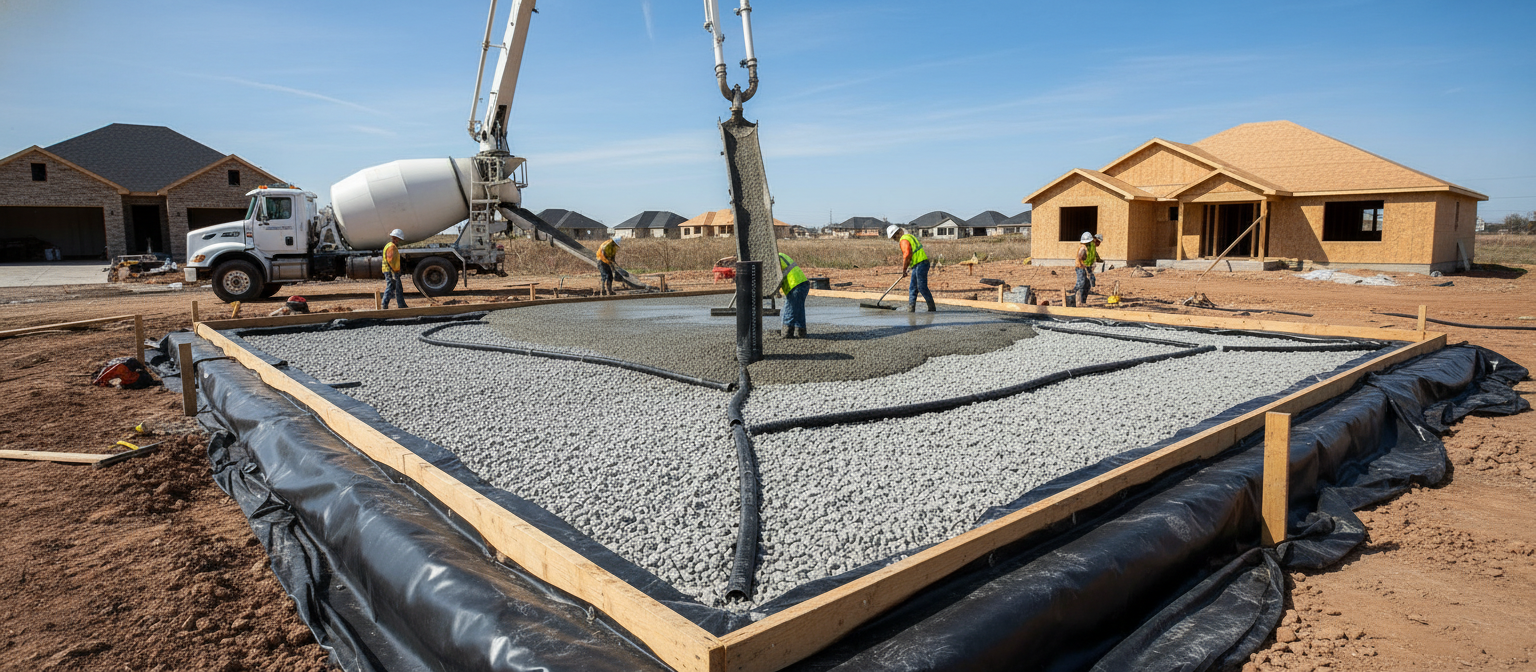
New Construction Radon Protection in Columbus Ohio
Install radon protection during construction and save up to 50% compared to retrofitting. Passive systems, builder partnerships, and code-compliant solutions for new homes.
Why Radon Protection Belongs in Every New Columbus Home
Columbus, Ohio sits squarely in EPA Radon Zone 1, the highest-risk designation for radon exposure. The geological conditions throughout Franklin County, Delaware County, and the surrounding areas produce some of the highest average radon levels in the state. For builders and homebuyers, this means radon protection is not optional but a fundamental component of a well-built home.
The most effective and economical time to install radon protection is during construction. Radon-resistant new construction (RRNC) techniques integrate seamlessly into the normal building process, adding minimal cost while providing a permanent radon management system that protects homeowners from day one. Installing these features during the build costs roughly 50% less than retrofitting the same system after the home is completed, because the foundation and walls are accessible and piping can be routed before finishes are applied.
Understanding Radon-Resistant New Construction (RRNC)
Radon-resistant new construction is a set of proven building techniques recommended by the EPA and adopted in building codes across the country. These techniques work together to prevent radon gas from entering the home through the foundation and to provide a clear path for any accumulated gas to vent safely above the roofline.
The Five Components of RRNC
A complete radon-resistant new construction system includes five key components, each playing a specific role in preventing radon entry:
- Gas-permeable layer: A 4-inch layer of clean, coarse gravel installed beneath the concrete slab. This layer allows soil gases, including radon, to move freely beneath the foundation so they can be collected and vented rather than being forced up through cracks in the slab.
- Plastic sheeting: A heavy-duty polyethylene vapor barrier placed over the gravel layer before the slab is poured. This sheet blocks radon and moisture from migrating directly through the concrete, which is naturally porous.
- Sealing and caulking: All openings, cracks, and penetrations in the foundation floor and walls are sealed. This includes utility penetrations, the slab-to-wall joint, sump pit covers, and any expansion joints. Proper sealing reduces radon entry points and improves the system's ability to maintain sub-slab depressurization.
- Vent pipe: A 3-inch or 4-inch PVC pipe runs from the gas-permeable layer beneath the slab, up through the building interior (typically through a plumbing chase or interior wall), and exhausts above the roofline. This pipe provides the pathway for radon gas to vent safely outdoors.
- Junction box: An electrical junction box is installed in the attic near the vent pipe, wired to a nearby electrical circuit. If post-construction testing reveals that the passive system is not reducing radon levels sufficiently, a fan can be quickly installed on the vent pipe and connected to this pre-wired junction box, converting the system from passive to active without any additional construction work.
Passive vs. Active Systems: Built-In Flexibility
One of the greatest advantages of installing radon protection during construction is the built-in flexibility between passive and active operation. A passive radon system relies on natural convection and the stack effect within the vent pipe to draw radon gas upward and out of the home. In many Columbus-area homes, a well-installed passive system is sufficient to keep radon levels below the EPA action level of 4 pCi/L.
However, if post-construction testing shows that radon levels remain elevated, the passive system can be upgraded to an active system in about an hour. A radon fan is simply installed on the vent pipe in the attic and plugged into the pre-wired junction box. The fan creates active suction that dramatically increases the system's ability to draw radon from beneath the foundation. This upgrade typically costs a fraction of what a full retrofit mitigation system would require, because all the piping and foundation work is already in place.
This two-stage approach gives homeowners and builders the best of both worlds: low-cost passive protection from day one, with an easy and affordable upgrade path if needed.
Cost Savings: During Construction vs. After
The financial case for installing radon protection during construction is compelling. Here is why the savings are so significant:
- Foundation access: During construction, the gravel layer and vapor barrier are installed as part of the normal foundation prep. There is no need to core through a finished slab, which is the most labor-intensive and disruptive part of a retrofit installation.
- Interior pipe routing: The vent pipe is routed through interior wall cavities or a plumbing chase before drywall is installed. In a retrofit, the pipe often must be run along the exterior of the home or through finished spaces, requiring additional finishing work.
- Electrical pre-wire: Running an electrical circuit to the attic junction box during rough electrical costs almost nothing. Adding a new circuit after the walls are closed requires cutting drywall, fishing wire, and patching.
- Sealing: Foundation sealing is far easier and more thorough when the slab is freshly poured and all penetrations are visible. Sealing a finished basement with stored items, appliances, and finished walls is significantly more difficult.
The total cost of RRNC installation during construction is typically 50% or less of what the same level of protection would cost as a retrofit. For builders, this translates to a small line item that delivers enormous value to the homebuyer and can be a meaningful selling point in the Columbus market, where radon awareness is high.
Builder Partnership Program
We work directly with builders and developers throughout the Columbus metropolitan area to integrate radon protection into new construction projects of all sizes. Our builder partnership program is designed to make radon-resistant construction as simple as possible for your team.
How We Work With Builders
- Pre-construction consultation: We review your plans and provide specifications for the radon-resistant features, including gravel depth, vapor barrier placement, pipe routing, and junction box location.
- Scheduled integration: We coordinate with your construction schedule, completing our work at the appropriate stages without delaying your timeline. Gravel and vapor barrier go in with your foundation prep. Piping goes in during rough plumbing or framing. Electrical pre-wire happens during rough electrical.
- Crew training: For builders who prefer to have their own crews handle the RRNC installation, we provide training and quality assurance oversight to ensure proper installation.
- Post-construction testing: After the home is complete and enclosed, we perform radon testing to verify system performance and provide documentation for the homeowner.
- Volume pricing: Builders working on multiple homes or entire subdivisions receive volume pricing that further reduces the per-home cost of radon protection.
Columbus Building Trends and Radon
The Columbus housing market continues to grow, with new residential construction expanding throughout Franklin County and into Delaware, Licking, Fairfield, and Union counties. Subdivisions in communities like Powell, Lewis Center, New Albany, Westerville, Dublin, Grove City, and Pickerington are being built on the same radon-prone geology that affects existing homes in the area.
Homebuyers in central Ohio are increasingly aware of radon and its health risks. Many now request radon information during the home buying process, and some will not purchase a new home without confirmed radon protection. For builders, offering RRNC as a standard feature or upgrade demonstrates a commitment to quality and occupant health that resonates with informed buyers. It also reduces the risk of post-sale radon testing revealing elevated levels, which can lead to costly remediation requests and buyer dissatisfaction.
Code Compliance in Central Ohio
Building code requirements for radon-resistant construction vary across the municipalities and counties in the Columbus area. Some jurisdictions have adopted the International Residential Code (IRC) provisions that require RRNC techniques in new construction, while others have not yet adopted these provisions. We stay current on the code requirements in every jurisdiction where we work and ensure that every system we install meets or exceeds the applicable standards.
Even in areas where RRNC is not yet required by code, installing radon protection during construction is considered a best practice by the EPA, the Ohio Department of Health, and the building science community. The minimal additional cost during construction makes it difficult to justify skipping radon protection, especially in a market where virtually every home will eventually be tested for radon during a sale.
Why Install Radon Protection During Construction
Smart building means building with radon protection from the start.
50% Cost Savings
Installing radon-resistant features during construction costs roughly half of what a retrofit system costs after the home is built. Foundation access, interior pipe routing, and electrical pre-wiring are dramatically cheaper when the home is still under construction.
Code Compliant
Our RRNC installations meet or exceed all applicable building code requirements and follow EPA best practices for radon-resistant new construction. We ensure your build passes inspection and provides genuine protection for the homeowner.
Future-Proof
Every RRNC system includes the piping and electrical infrastructure for easy activation if needed. Homeowners get passive protection from day one with the ability to upgrade to active mitigation in about an hour, without any construction work.
New Construction Radon Questions
What is radon-resistant new construction (RRNC)?
How much does it cost to install radon protection during new construction?
What is the difference between a passive and active radon system?
Is radon-resistant construction required by code in Columbus Ohio?
Do you work directly with builders and developers?
Should I still test for radon after building with RRNC techniques?
Explore Our Other Services
Comprehensive radon solutions for every need.
Professional Radon Testing
Post-construction radon testing to verify your RRNC system is performing effectively. Short-term and long-term testing options available.
Learn MoreRadon Mitigation Systems
Active radon mitigation system installation for existing homes that need retrofit solutions. Sub-slab depressurization and more.
Learn MoreCommercial Radon Services
Large-scale radon solutions for commercial new construction, multi-family developments, and institutional buildings in Columbus.
Learn MorePartner With Us on Your Next Build
Contact us to discuss builder pricing, volume discounts, and how we integrate radon protection into your construction schedule.
Call (614) 412-9822