Columbus, Ohio has average indoor radon levels reported above 8.0 pCi/L, which is more than double the EPA action level and makes radon negotiation a common part of local real estate deals.
Key Takeaways
| Question | Short Answer |
|---|---|
| 1. Do buyers in Columbus usually ask for radon tests? | Yes, especially in Central Ohio where many homes test above 4 pCi/L, buyers often make radon testing a standard inspection item or add-on through services like Radon Pros radon testing. |
| 2. What is a typical radon negotiation outcome? | Most agreements land on the seller paying for mitigation or giving a credit close to the expected system cost, often aligned with services like professional mitigation installation. |
| 3. Who should coordinate radon work during a sale? | Either side can coordinate, but many buyers prefer using established local providers such as Columbus Radon residential mitigation so they know who did the work. |
| 4. How does radon affect commercial deals? | Multi‑family and commercial properties in Central Ohio often need testing and possible mitigation, and owners lean on services like commercial radon mitigation in Columbus as part of due diligence. |
| 5. Is radon negotiation different for real estate agents? | Agents frequently add radon clauses and timelines, using local specialists such as real estate transaction radon support to keep closings on track. |
| 6. What if I just need guidance and a quote? | You can reach out for quotes or advice through contact pages like Columbus Radon Mitigation contact to understand potential costs before you negotiate. |
| 7. Can I pre‑plan radon work before listing? | Yes, many sellers schedule testing or tentative work in advance using appointment tools like Radon Pros schedule appointment so they are ready if buyers raise radon concerns. |
Understanding Radon Negotiation In Columbus, Ohio Real Estate
In Columbus, radon is not a rare surprise, it is a frequent negotiation topic in inspection periods and counteroffers.
With local averages reported above 8.0 pCi/L, both buyers and sellers should assume radon may show up in test results and plan ahead.
Why Radon Comes Up In So Many Columbus Deals
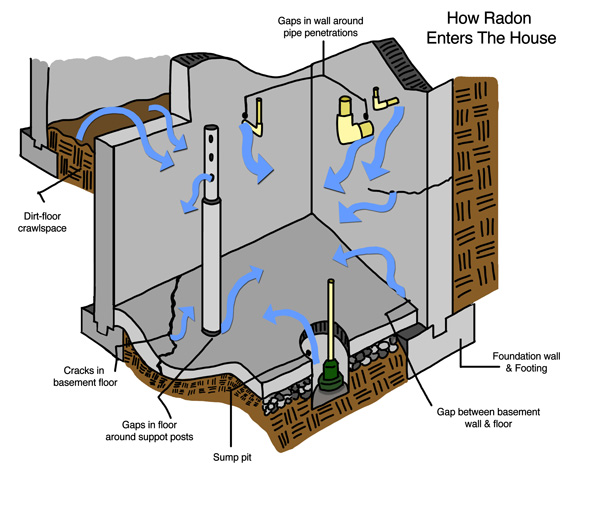
Central Ohio geology allows radon to move through soil and into basements and slab homes, which is why so many tests register at or above the EPA action level of 4 pCi/L.
Because of this, radon conversations are now common in offers, inspection reports, and addendums instead of being a niche concern.
Action Levels And Their Role In Negotiation
The EPA recommends fixing homes at or above 4 pCi/L, and that simple number often becomes the reference point in negotiations.
If a test shows levels below that threshold, buyers and sellers usually treat radon as lower priority, while higher results nearly always trigger a request for mitigation or credits.
How We Fit Into The Negotiation Picture
We help both sides understand realistic testing and mitigation options so they can write clear, practical agreements.
By outlining timelines, cost ranges, and system expectations, we support smoother transactions instead of last‑minute surprises.

Ohio Radon Laws, Disclosures, And Your Negotiation Leverage
Ohio requires sellers to disclose the presence of radon in residential property on the state Residential Property Disclosure Form.
This disclosure framework sets the stage for clear conversations about who will pay for testing, mitigation, or credits.
What Sellers Must Disclose In Columbus
On the disclosure form, sellers must report known radon tests and mitigation systems, including approximate dates and any available documentation.
If a seller knows of high radon levels or existing mitigation equipment, buyers should see that information long before inspections end.
How Disclosures Affect Buyer Strategy
When a disclosure mentions radon, buyers gain leverage to request updated testing, system inspections, or cost sharing based on current readings.
Even if a system is present, buyers often ask for proof that it is functioning and delivering results below the typical 4 pCi/L action level.
Why Fresh Testing Still Matters
Older test results may not reflect current conditions, especially if the home has had remodeling, changes to HVAC, or foundation work.
We usually recommend a new test during the transaction so negotiations rely on current, property‑specific data instead of assumptions.
Radon Testing In Columbus: Costs, Timing, And Deal Strategy
In Ohio, a professional radon test in a home typically costs about $150–$300, which is usually a small fraction of the overall transaction.
Using that modest cost strategically can give you solid data to negotiate fair terms without stalling the sale.
When To Order A Radon Test During A Sale
Buyers usually schedule tests right after the purchase contract is signed, often as part of the overall inspection period.
That timing leaves enough room to receive lab results, compare quotes, and negotiate any repairs or credits before contingency deadlines.
Short‑Term vs Long‑Term Testing In Negotiations
Most real estate transactions in Columbus rely on short‑term tests because they deliver results in a few days and fit typical closing timelines.
Long‑term tests can provide more seasonal insight, but they rarely match contract deadlines, so they are less common in active negotiations.
Using Professional Testing To Build Trust
When a neutral, licensed tester provides results, both sides usually feel more confident about the numbers on the table.
We find that third‑party data reduces disputes and makes it easier to agree on solutions, instead of arguing about whether the result is reliable.
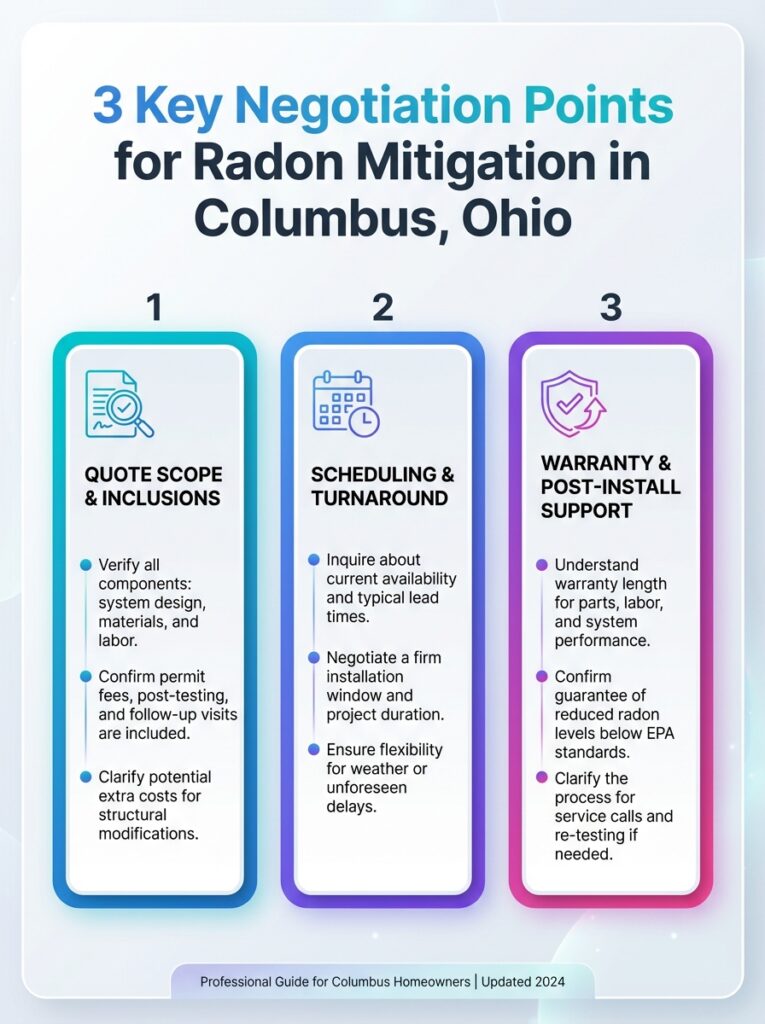
Three essential negotiation points for radon mitigation in Columbus, Ohio. This infographic assists homeowners in negotiating with radon remediation contractors.
Did You Know?
Fewer than 25% of existing U.S. homes have been tested for radon, which means many Columbus buyers and sellers walk into negotiations without knowing their current radon levels.
Radon Mitigation Costs In Columbus And How To Talk About Money
Typical radon mitigation costs in Ohio are commonly estimated between $600 and $1,200 per residential system, depending on the home layout and system design.
Nationwide, the average is around $1,000, with some homes requiring more extensive work, and these figures often frame the credits or repairs written into contracts.
Breaking Down The Typical Cost Range
Basic active sub‑slab depressurization systems for a straightforward basement usually fall on the lower end of the range.
More complex homes, such as those with crawlspaces or large footprints, can require additional suction points or sealing that push costs higher.
Who Pays For What In A Typical Negotiation
In many Columbus deals, sellers either pay for full mitigation installation or grant a credit close to a written quote from a local mitigation company.
Buyers sometimes accept a partial credit if they want to choose their own contractor and system design after closing.
Using Written Quotes To Your Advantage
We encourage both parties to lean on written proposals instead of guesswork when talking numbers.
A clear quote that outlines the scope of work, warranty terms, and estimated result level gives everyone a concrete basis for negotiation.
| Scenario | Common Columbus Outcome |
|---|---|
| Buyer test shows > 4 pCi/L | Seller pays for mitigation before closing or provides credit around expected system cost |
| Existing system, mixed documentation | Buyer asks for re‑test and minor repairs, shared or seller‑paid |
| Very high level results | Larger credits or more robust system quotes requested, sometimes with re‑test after installation |
Seller Strategies: Using Radon Negotiation To Protect Your Price
Sellers in Columbus can treat radon negotiation as another line item to manage, not a reason for a deal to fall apart.
With some preparation and clear communication, you can often preserve your net price while addressing buyer concerns.
Pre‑Listing Testing And Disclosure
Some sellers choose to test for radon before listing so they understand their position in advance.
If levels are low, they can highlight that result, and if levels are high, they can plan mitigation or credits instead of scrambling later.
Offering Mitigation Or Credits Upfront
When a seller already knows radon levels are above the action line, listing remarks can mention a planned credit or willingness to install a system with an acceptable quote.
This reduces surprise and shows buyers that the seller is proactive and reasonable about the issue.
Documenting Any Completed Work
If you already installed a system, keep invoices, warranties, and any post‑mitigation test results in one place.
We often see smoother negotiations when sellers can hand buyers a simple packet that proves what was done, by whom, and when.

Buyer Strategies: Getting Radon Addressed Without Losing The House
For buyers, the goal is not to punish the seller, it is to make sure the home is reasonably addressed for radon based on trusted guidelines.
We help buyers focus on solutions that fit the price point, timing, and local norms for Columbus transactions.
Writing Strong, Fair Radon Clauses
Many buyers include a clause that requires testing and outlines specific next steps if the result is above a defined threshold.
Clear language about who orders testing, who chooses the contractor, and what happens if levels are elevated can avoid confusion later.
Prioritizing Solutions Over Confrontation
Instead of demanding extreme concessions, most buyers find more success asking for standard mitigation or a fair credit based on a quote.
We often see that a calm, solution‑oriented tone leads sellers to cooperate more readily on radon topics.
Coordinating With Your Agent And Contractor
Your real estate agent can help you structure deadlines and contingencies so you have time to receive results and quotes.
Once you have data, a contractor can outline realistic options so you know whether you are asking for a small fan system or a more involved project.
Did You Know?
More than 1 in 15 homes in the U.S. may have elevated radon levels, which explains why radon clauses and negotiations are now a routine part of Columbus real estate contracts.
How Columbus Radon Mitigation Systems Factor Into Negotiations
From a negotiation standpoint, the type of system matters because it affects both upfront cost and ongoing expectations.
We design and install systems tailored to the property so buyers and sellers know what is actually being agreed to, not a generic description.
Common System Types Used In Central Ohio
The most common approach in Columbus is an active sub‑slab mitigation system that pulls air from beneath the foundation and vents it outside.
Many homes with crawlspaces or complex layouts may need additional suction points or sealing steps to achieve the target levels.
Warranty And Performance Guarantees
Columbus Radon Mitigation, for example, notes a five year warranty on installed systems and a guarantee that post‑mitigation results will be below the typical EPA recommendation of 4 pCi/L.
Such warranties can provide reassurance in negotiations, since buyers know what happens if levels do not drop as expected.
Explaining System Expectations To Both Sides
We walk sellers and buyers through how the system will look, how noisy it will be, and what routine attention it might need.
When both sides understand the equipment, it becomes easier to agree that mitigation is a practical fix rather than a major unknown.
Radon Negotiation In Real Estate Transactions: Timelines And Tactics
In a Columbus purchase contract, timing is often as important as cost when it comes to radon negotiation.
We see the best outcomes when testing, quoting, and installation are aligned with inspection deadlines and closing dates.
Sample Timeline For A Smooth Radon Negotiation
- Day 1–3: Buyer orders radon test immediately after contract acceptance.
- Day 4–7: Results come back, and buyer requests quotes from one or more mitigation providers.
- Day 8–10: Parties negotiate whether seller installs before closing or provides a credit.
- Before closing: If installing pre‑closing, contractor completes work and may perform a follow‑up test.
This type of schedule helps avoid last‑minute delays that can put the closing date at risk.
Writing Clear Radon Addendums
We encourage language that spells out the target radon level, type of system, and any post‑installation testing that will occur.
Specificity helps avoid disagreements about what “fixing” radon actually means for that property.
Keeping The Deal On Track
Most buyers do not want to walk away over radon alone if they love the home and the issue is addressed in a practical way.
Most sellers do not want the property to fall out of contract over something that can be reasonably managed with a standard system or credit.
Commercial And Multi‑Family Radon Negotiation In Columbus
Radon negotiation is not limited to single‑family homes, it also shows up in apartment complexes, schools, and commercial buildings.
These properties can involve larger systems and more detailed testing plans, which is why clear proposals are essential.
Unique Considerations For Commercial Properties
Commercial buyers and tenants often want assurance that previous testing has been done and that mitigation systems are appropriate for the building size.
We frequently test multiple zones in larger properties so negotiations can address each area that needs attention.
Multi‑Family Transactions And Tenant Communication
In multi‑family buildings, owners and buyers may need to coordinate access and communication with tenants when testing and installation take place.
Negotiations sometimes include agreements about scheduling and notice so tenants are not caught off guard.
Budgeting For Larger Systems
Commercial and multi‑family mitigation costs vary widely based on structure and occupancy.
That is why we focus on detailed proposals that investors and owners can plug into their pro‑forma and negotiation models.
Working With Local Radon Professionals To Support Your Negotiation
Having a knowledgeable local contractor involved turns vague fears into clear action plans and estimates.
We work closely with buyers, sellers, and agents across Columbus to provide testing, system design, and documentation that fits real‑world contracts.
What We Typically Provide During A Transaction
- Radon testing with written results and understandable explanations.
- Mitigation proposals that describe the system, cost, and expected performance.
- Post‑installation information and follow‑up testing options when requested.
This information supports straightforward negotiations and helps everyone stay aligned.
Questions To Ask Your Radon Contractor
We suggest you ask about licensing, experience in Columbus soil conditions, warranty terms, and typical turnaround times.
Clear answers give both sides confidence that the agreed work will be completed properly and on schedule.
Coordinating With Your Real Estate Team
We regularly coordinate directly with agents, transaction coordinators, and sometimes attorneys to keep everyone updated.
That coordination is especially important when closing dates are tight and radon work needs to be sequenced with other repairs.
Conclusion
Radon negotiation in Columbus, Ohio is no longer unusual, it is a routine part of buying and selling homes and commercial properties in this region.
By understanding local radon levels, Ohio disclosure rules, typical testing and mitigation costs, and practical timelines, you can approach negotiations calmly and confidently.
We are here to support that process with clear data, realistic proposals, and systems designed for Central Ohio properties so buyers and sellers can reach fair agreements and keep their deals moving forward.