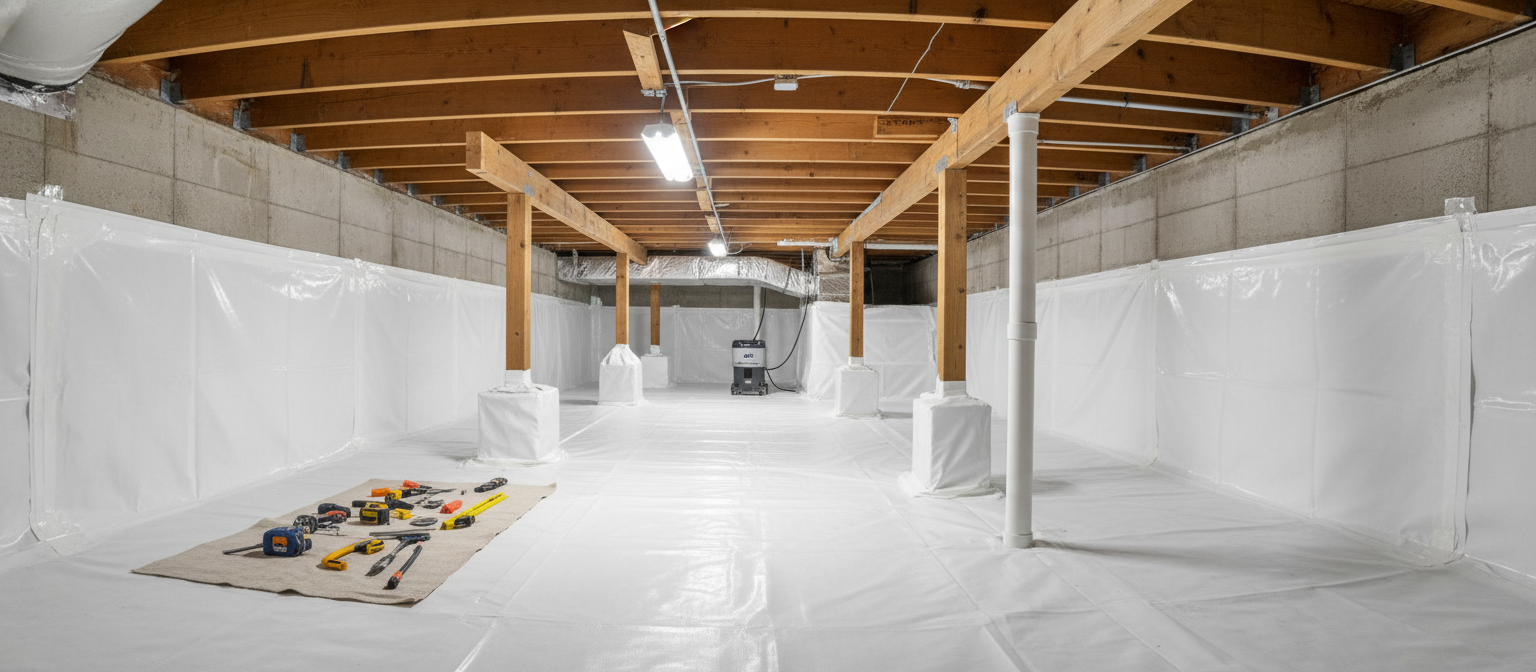
Crawl Space Encapsulation in Columbus Ohio
Stop radon, moisture, and mold at the source. Our heavy-duty encapsulation systems protect your home from the ground up, improving air quality and reducing energy costs.
Why Columbus Homes Need Crawl Space Encapsulation
If your Columbus-area home has a crawl space, you are dealing with two invisible threats that most homeowners overlook: radon gas and excess moisture. These problems feed off each other, and left unchecked, they can compromise your family's health, damage your home's structure, and drive up your energy bills. Crawl space encapsulation addresses both threats simultaneously, creating a sealed, conditioned environment beneath your home that blocks radon entry, eliminates moisture problems, and improves the air you breathe every day.
Central Ohio's climate and geology make crawl space encapsulation particularly important. Columbus receives approximately 40 inches of rainfall annually, and the region's clay-heavy glacial till soils drain poorly, creating a persistently moist environment beneath homes with crawl space foundations. Add to this the fact that Franklin County sits in EPA Zone 1 for radon risk, and you have a crawl space that is actively introducing both moisture and radioactive gas into your living space.
Research from the EPA and building science organizations shows that up to 50% of the air you breathe on the first floor of your home originates from the crawl space. This phenomenon, known as the stack effect, means that whatever is in your crawl space -- moisture, mold spores, radon, musty odors -- is being continuously drawn upward into your living areas. Encapsulation breaks this cycle by transforming your crawl space from a liability into a controlled, clean environment.
Our Crawl Space Encapsulation Process
At Columbus Radon Experts, we take a comprehensive approach to crawl space encapsulation that goes beyond simply laying down plastic sheeting. Our system is designed as an integrated solution that addresses radon, moisture, air quality, and energy efficiency in a single installation. Here is how we do it:
Step 1: Crawl Space Assessment and Preparation
Every encapsulation project begins with a thorough inspection of your crawl space. Our technicians evaluate the current condition, identify moisture sources, check for standing water or drainage issues, test for radon, and assess the structural components including floor joists, support piers, and foundation walls. We also measure the space precisely to ensure complete material coverage.
Before installing the vapor barrier, we address any existing problems. Standing water is remediated, debris is removed, and if drainage issues exist, we may recommend installing an interior French drain or sump pump system. Any damaged or deteriorated insulation is removed. This preparation ensures the encapsulation system performs optimally from day one.
Step 2: Heavy-Duty Vapor Barrier Installation
The cornerstone of our encapsulation system is a 20-mil reinforced polyethylene vapor barrier -- significantly thicker and more durable than the standard 6-mil plastic commonly used by general contractors. This commercial-grade barrier is resistant to punctures, tears, and degradation from ground contact, ensuring it performs reliably for 20 years or more.
We install the barrier across the entire crawl space floor with generous overlap at all seams (minimum 12 inches), and extend it up the foundation walls to at least 6 inches above the exterior grade line. All seams are sealed with specialized barrier tape rated for long-term adhesion. The barrier is mechanically fastened to the foundation walls using termination bars and masonry fasteners, creating a continuous, airtight seal that prevents soil moisture and radon gas from entering the crawl space.
Around piers, support columns, pipes, and other penetrations, we cut and seal the barrier precisely to maintain the vapor seal. Every detail matters -- a single unsealed penetration can allow significant moisture and radon intrusion over time.
Step 3: Vent Sealing and Insulation
Traditional building codes required crawl space vents to allow outside air circulation. Modern building science has proven this approach is counterproductive, especially in Ohio's humid climate. Open vents introduce warm, humid summer air into the cooler crawl space, causing condensation on cool surfaces like ductwork, floor joists, and the vapor barrier itself. This condensation feeds mold growth and wood rot.
We seal all existing crawl space vents with rigid foam board insulation and airtight covers. Foundation walls are insulated with closed-cell rigid foam board (typically R-10 to R-15), which provides both thermal insulation and an additional moisture barrier. This converts your crawl space from a vented, unconditioned space to a sealed, semi-conditioned environment that is far easier to manage.
Step 4: Integrated Ventilation and Dehumidification
A sealed crawl space needs controlled ventilation to manage residual moisture and maintain air quality. Depending on your home's specific conditions, we recommend one of two approaches:
- Crawl space dehumidifier: A commercial-grade dehumidifier sized for your crawl space maintains relative humidity below 60%, preventing condensation, mold, and wood rot. These units are energy-efficient, self-draining, and designed for the tight spaces and harsh conditions of a crawl space environment.
- Conditioned air supply: In some homes, supplying a small amount of conditioned air from the HVAC system into the crawl space is sufficient to manage humidity and maintain positive pressure. This approach works well in homes with efficient HVAC systems and moderate moisture levels.
For homes with elevated radon levels, we integrate an active sub-membrane depressurization system beneath the vapor barrier. This works similarly to a sub-slab radon system -- a small fan draws radon from beneath the barrier and exhausts it above the roofline, preventing the gas from accumulating in your crawl space or home.
Columbus Water Table and Moisture Challenges
Columbus and its surrounding communities face unique moisture challenges that make crawl space encapsulation especially valuable. The region's high water table, combined with clay-heavy soils that resist drainage, creates persistent moisture conditions beneath homes. During spring thaws and heavy rain events, groundwater can rise to within inches of the surface, introducing significant moisture vapor into unprotected crawl spaces.
Neighborhoods in low-lying areas of Columbus, Westerville, Gahanna, and Reynoldsburg are particularly susceptible to seasonal water table fluctuations. Even homes on higher ground in communities like Upper Arlington, Dublin, and Powell can experience moisture problems when clay soils become saturated and release moisture vapor upward through the crawl space floor.
Without encapsulation, this moisture leads to a cascade of problems: relative humidity above 70% (ideal for mold growth), condensation on HVAC ductwork and floor joists, wood rot in structural members, musty odors throughout the home, and increased radon concentrations as moist soil releases trapped gas more readily. Our encapsulation system breaks this chain completely.
How Encapsulation Reduces Radon Levels
Crawl space encapsulation is one of the most effective methods for reducing radon in homes with crawl space foundations. The mechanism is straightforward: radon enters your home through exposed soil and gaps in the building envelope. By sealing the crawl space with a heavy-duty vapor barrier and closing all openings, you eliminate the primary pathway for radon entry.
Studies show that encapsulation alone can reduce radon levels by 30% to 50% in many homes. When combined with active sub-membrane depressurization (a small fan system that draws radon from beneath the barrier), reductions of 90% or more are achievable. This dual approach -- passive barrier plus active depressurization -- is what we call our Dual Protection System, and it is the most effective strategy for homes with crawl space foundations in the Columbus area.
Crawl Space Encapsulation Costs in Columbus
Professional crawl space encapsulation in the Columbus area typically ranges from $1,500 to $2,500 for a standard residential crawl space. The final cost depends on several factors:
- Crawl space size: Larger crawl spaces require more material and labor. Most Columbus homes have crawl spaces ranging from 500 to 1,500 square feet.
- Current condition: Crawl spaces with standing water, debris, or existing damage may require additional preparation work before encapsulation can begin.
- Drainage requirements: If an interior French drain or sump pump is needed, this adds to the project cost but is essential for long-term performance.
- Dehumidification: Adding a commercial-grade crawl space dehumidifier is recommended for most Columbus homes and is an additional investment that pays for itself in reduced moisture damage and improved air quality.
- Radon integration: If active sub-membrane depressurization is needed, the radon fan and additional piping are factored into the estimate.
We provide detailed, written estimates at no charge after inspecting your crawl space. Our pricing includes all materials, professional installation, seam sealing, mechanical fastening, and a post-installation inspection to verify the system's integrity.
Benefits Beyond Radon and Moisture Control
While radon reduction and moisture control are the primary reasons for crawl space encapsulation, the benefits extend far beyond these critical functions:
- Energy savings: A sealed, insulated crawl space reduces heat loss in winter and heat gain in summer. Homeowners typically see a 15% to 20% reduction in heating and cooling costs after encapsulation, which means the system pays for itself over time.
- Improved indoor air quality: By eliminating mold, mildew, and musty odors from the crawl space, encapsulation significantly improves the air quality throughout your entire home. This is especially important for family members with allergies, asthma, or other respiratory conditions.
- Structural protection: Moisture is the leading cause of wood rot in crawl space floor joists and support structures. Encapsulation eliminates this moisture, preserving the structural integrity of your home for decades.
- Pest deterrent: A sealed crawl space is far less attractive to insects, rodents, and other pests that thrive in damp, dark environments. Encapsulation removes the moisture and organic material that these pests need to survive.
- Home value: An encapsulated crawl space is a significant selling point in the Columbus real estate market. Home inspectors and buyers increasingly recognize the value of a professionally sealed and conditioned crawl space, and it can add measurable value to your property.
- Usable storage: Once encapsulated, your crawl space becomes a clean, dry environment suitable for storing items that would otherwise be damaged by moisture and mold.
Signs Your Crawl Space Needs Encapsulation
Many Columbus homeowners are unaware of the conditions in their crawl space until problems become visible upstairs. Here are the warning signs that indicate your crawl space needs professional attention:
- Musty or earthy odors on the first floor of your home
- Visible mold or mildew on floor joists or subflooring
- Sagging or soft spots in first-floor flooring
- Condensation on windows, especially in lower-level rooms
- Allergy symptoms that worsen when you are home
- Elevated radon test results (4.0 pCi/L or above)
- Standing water or damp soil visible in the crawl space
- Higher than expected heating and cooling bills
- Pest infestations originating from beneath the home
If you recognize any of these signs, we recommend scheduling a free crawl space inspection. Our technicians will assess the conditions, identify specific problems, and provide a detailed estimate for encapsulation tailored to your home's needs.
Triple-Threat Protection for Your Home
Our encapsulation systems deliver three critical benefits that protect your home and your family's health.
Radon Reduction
Heavy-duty vapor barriers block radon entry through exposed soil. Combined with active depressurization, reductions of 90% or more are achievable.
Moisture Control
Eliminates moisture vapor from ground evaporation, preventing mold, wood rot, and musty odors throughout your home.
Energy Savings
Sealed and insulated crawl spaces reduce heating and cooling costs by 15-20%, paying for the encapsulation over time.
Crawl Space Encapsulation Questions
Common questions about encapsulating your crawl space for radon and moisture protection.
What is crawl space encapsulation and how does it work?
How much does crawl space encapsulation cost in Columbus?
Does crawl space encapsulation help with radon?
How long does crawl space encapsulation last?
Will crawl space encapsulation help with musty odors in my home?
Do I need a dehumidifier with crawl space encapsulation?
Complete Home Protection
Pair crawl space encapsulation with our other services for comprehensive radon and moisture protection.
Professional Radon Testing
EPA-approved short-term and long-term radon testing to determine your home's radon levels before and after encapsulation.
Radon Mitigation Systems
Active soil depressurization systems that work alongside encapsulation for maximum radon reduction in your home.
System Maintenance
Annual inspections, dehumidifier servicing, and barrier integrity checks to keep your encapsulation system performing at its best.
Protect Your Crawl Space Today
Schedule a free crawl space inspection and get a detailed estimate for professional encapsulation. Stop radon and moisture at the source.