The Columbus Library Radon Monitor Program gives central Ohio residents a rare opportunity to test their homes for radon at no cost, by borrowing a professional-style continuous monitor directly from their local library. After the Dec. 11, 2025 launch, a radon monitor will be available at each of the Columbus Metropolitan Library’s 23 branches, so regular cardholders can check their own spaces using real-time data instead of guessing.
Key Takeaways
| Common Question | Short Answer |
|---|---|
| What is the Columbus Library Radon Monitor Program? | A partnership that lets Columbus Metropolitan Library cardholders borrow continuous radon monitors for free to test their homes, similar to how they borrow books, as described in our full Columbus Library radon testing guide. |
| How accurate are library monitors compared with kits? | Continuous monitors provide detailed hour‑by‑hour readings and can be easier to use correctly than charcoal kits, which we break down in our Ohio radon test kit accuracy explainer. |
| Can I start with a free charcoal kit instead? | Yes, many residents begin with a free state‑supported kit before using a monitor, and our free radon test kit Ohio guide explains where to get one and how to use it. |
| When is the best time to use a library radon monitor? | Winter often shows higher readings because homes stay closed up, which we cover in detail in our winter radon testing in Columbus overview. |
| Should I pair the library monitor with other testing methods? | Many homeowners combine short‑term and long‑term testing to better understand patterns, as outlined in our short‑term vs long‑term radon testing guide. |
| Why is this program so important for Columbus? | Local investigations show a high percentage of tested homes above the EPA action level, which is why we also highlight those findings in our Columbus Dispatch radon investigation summary. |
How The Columbus Library Radon Monitor Program Works Day‑To‑Day
The Columbus Library Radon Monitor Program is built around a simple idea, which is that testing should be as easy as checking out a book. Each Columbus Metropolitan Library branch maintains one continuous radon monitor that any cardholder can reserve and borrow for a limited period.
Cardholders check out the unit, place it in a main living space or bedroom, and let it run for several days to see how levels fluctuate. The monitor logs readings and displays current and average values so you can see whether your home is closer to background levels or the EPA’s 4.0 pCi/L action threshold.


Because the program places a monitor at all 23 branches, borrowers are not competing with an entire metro area for a single device. Wait lists may form at busy locations, but the spread across the system keeps access realistic for most neighborhoods.
For our team, this structure is one of the most practical ways to get first‑time testers to try radon monitoring without cost or complexity. Once homeowners see clear numbers, they can decide on next steps with much more confidence.
Why The Columbus Library Program Is Different From Typical Radon Testing Options
Typical radon testing in Ohio often starts with a mail‑in charcoal kit or a paid inspection from a certified tester. The library monitor program adds a third path, free continuous monitoring, that blends professional‑style tools with public access.
Continuous monitors offer several advantages compared with single‑use kits. They update hour by hour, capture daily swings, and respond quickly to lifestyle changes like opening windows or changing HVAC settings.
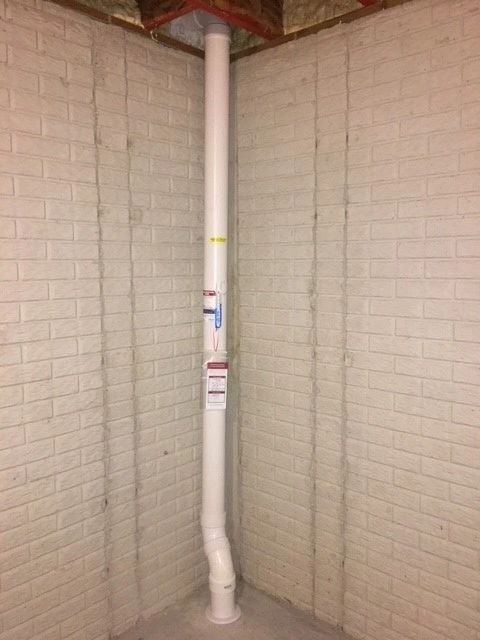
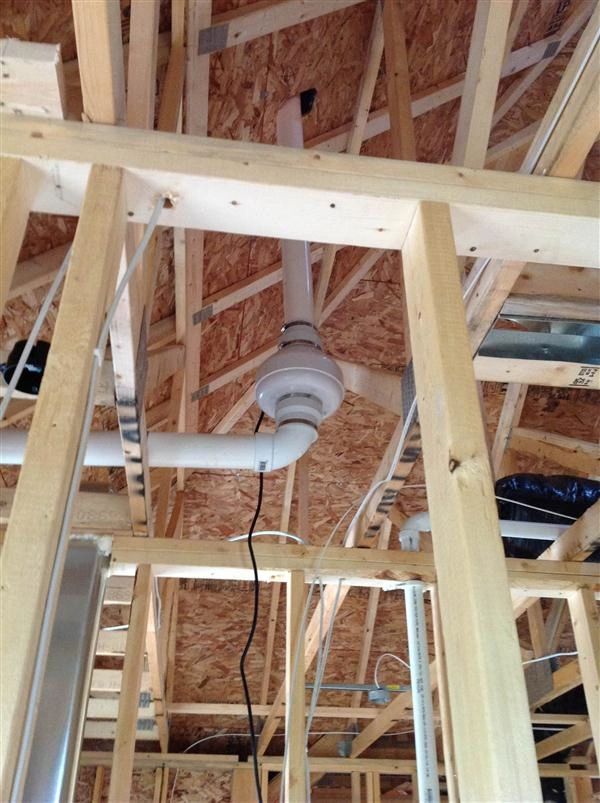
The other key difference is cost. Where a homeowner might normally pay for a commercial monitor or hire a professional, the library program removes that initial barrier so families can at least get a baseline look at their conditions.
We view this as especially useful for renters and budget‑conscious homeowners who want to understand their indoor environment before committing to further testing or getting quotes for mitigation, which can run roughly $800 to $2,500 in central Ohio depending on the home.
Step‑By‑Step: How To Reserve, Borrow, And Use A Library Radon Monitor
Using a Columbus library radon monitor starts with the same steps you take to borrow any other item. You log into your Columbus Metropolitan Library account, search for the radon monitor at your branch, and place a hold if it is not immediately available.
When your turn arrives, you pick up the monitor at the branch desk, confirm the loan period, and sign any brief usage instructions. Most branches use a loan window that is long enough to capture several days of data while keeping the device circulating for other borrowers.
At home, you place the monitor in a frequently used room on the lowest lived‑in level, ideally a bedroom or family room. The unit should sit on a stable surface away from exterior walls, drafts, and direct heat sources to avoid skewed readings.
After several days of continuous logging, you write down or photograph the average and current readings, then return the monitor on time so the next resident can use it. From there, you can decide whether to repeat testing in another season or speak with a radon professional about next steps.
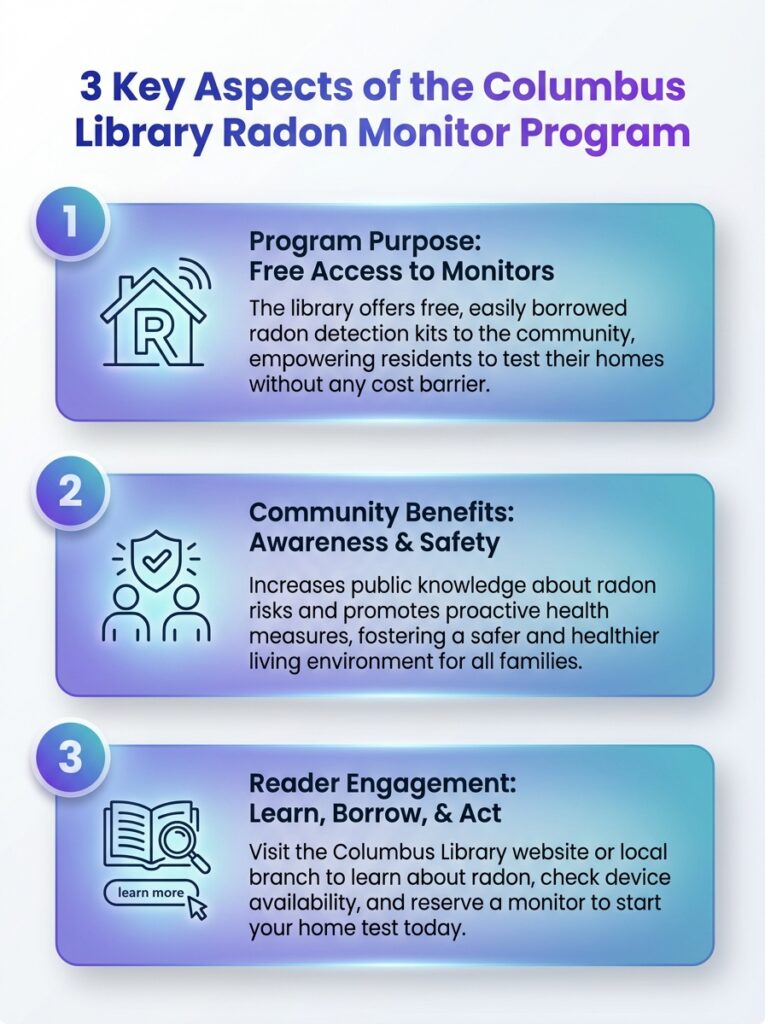
This infographic highlights three core components of the Columbus Library Radon Monitor Program. It explains how monitoring works, the safety thresholds used, and recommended actions for the community.
Did You Know?
Central Ohio residents can test their homes for radon for free by borrowing a continuous radon monitor from the Columbus Metropolitan Library.
Continuous Library Monitors vs Short‑Term And Long‑Term Test Kits
When we talk with Columbus homeowners, one of the first questions is how a borrowed library monitor compares to a low‑cost charcoal kit or a longer test. The main difference is that a continuous monitor shows you a moving picture of your levels instead of a single snapshot.
Short‑term charcoal kits, which usually run for 2 to 7 days, can be very useful for quick screening or real estate transactions. However, their accuracy is sensitive to placement, sealing, and shipping conditions, and they do not show how levels swing hour by hour.

Long‑term tests, which run for more than 90 days, are excellent for approximating a year‑round average, especially in climates like Ohio where winter and summer conditions differ. The trade‑off is time, because you must wait months to see the final result.
The Columbus Library Radon Monitor Program fits in between these options. It gives you detailed short‑term data without the purchase price, and you can still follow up with a long‑term test or professional evaluation if readings stay high.
Radon In Central Ohio: Why A Library‑Based Monitor Program Matters
Central Ohio sits in an area where radon is a known concern, and multiple investigations have found a high share of homes above the EPA action level. In one central Ohio investigation, roughly 79.4 percent of tested homes showed radon above that threshold, which is a strong signal that many properties need closer attention.
The Ohio Department of Health has also noted that radon has been measured at elevated levels in all 88 counties statewide. This does not mean every home has the same readings, but it does mean that your neighbor’s test results do not guarantee your own safety.
In that context, a free, accessible program like the Columbus Library Radon Monitor initiative helps fill a serious information gap. It brings testing into neighborhoods where residents might not otherwise pay for equipment or hire a testing company.
From our perspective, wider public testing also creates better local understanding of radon patterns. When more residents test and share their results, communities can have more informed conversations about building practices, mitigation, and long‑term planning.
Did You Know?
After the Dec. 11 launch, a radon monitor will be available at each of the Columbus Metropolitan Library’s 23 branches.
Seasonal Timing: Using Library Monitors In Winter And Other High‑Risk Periods
Radon levels in Columbus often run higher in winter because homes stay closed, stacks of warm air rise through the structure, and more air is pulled from the soil below. That stack effect can increase the entry of soil gas into basements and lower levels where monitors typically sit.
For that reason, many experts recommend testing during colder months when windows are closed and ventilation is limited. The Columbus Library Radon Monitor Program fits well with that advice, since residents can plan to borrow devices during January Radon Action Month or other winter periods.
If your winter results appear elevated, it can be wise to test again in another season or run a long‑term test to understand the full yearly average. The library monitor is a good starting point, but repeating the process gives a clearer picture of how much levels vary.
We also encourage residents not to delay winter testing because of holiday schedules. The program’s branch coverage improves the odds that you can find an available unit even during busy months.
Interpreting Your Library Radon Monitor Results Responsibly
Once you have a few days of readings from your borrowed monitor, the next step is figuring out what those numbers tell you. Continuous monitors typically display both a short‑term average over the past day or two and a longer average over the full testing period.
If your readings cluster well below common reference levels, that is encouraging, though no single test can completely rule out variation over time. If your results repeatedly meet or exceed the EPA’s 4.0 pCi/L action level, that is a strong signal to consider further testing and possibly mitigation planning.

It is important to remember that a borrowed monitor is a screening tool, not a full engineering design. If you see concerning numbers, a certified radon professional can help verify conditions and outline mitigation options that fit your foundation type and budget.
We avoid making medical claims about specific readings and instead focus on helping homeowners understand their options. Testing gives you information, and professional guidance can help you choose practical steps to manage your indoor environment.
Pairing The Library Program With Other Free And Low‑Cost Testing Resources
The Columbus Library Radon Monitor Program does not exist in isolation. In Ohio, residents can often access free charcoal test kits through the Ohio Indoor Radon Program, local health departments, and seasonal campaigns.
Many households choose to start with a free charcoal kit to get a quick reading, then follow up with the library’s continuous monitor to see how results hold up over several days. This combined approach provides both a lab‑analyzed snapshot and an in‑home time series.
From there, if results indicate a need for action, you can request quotes from licensed mitigation providers. In central Ohio, typical mitigation systems often fall in the $800 to $2,500 range, depending on whether your home has a basement, crawlspace, or slab foundation and how accessible piping routes are.
We see the library monitors as a bridge between free starter kits and more involved professional services. They give you enough data to decide whether it makes sense to invest additional time and money.
Community Data, Journalism Partnerships, And Public Awareness
One unique aspect of the Columbus Library Radon Monitor Program is its connection to local journalism and public data. Each continuous radon monitor includes a QR code that lets users read related Columbus Dispatch coverage and optionally submit their test results to the news organization.
The program itself is a partnership between The Dispatch and the Columbus Metropolitan Library to support radon testing across central Ohio. That collaboration helps bring more attention to the topic and encourages open conversation about indoor air quality.
When residents share their readings through that QR code, it contributes to a broader picture of radon levels in different neighborhoods and housing types. Over time, that aggregated data can inform reporting, policy discussions, and community outreach.
As radon professionals, we appreciate how this model blends technical tools with public storytelling. Testing results are not simply numbers on a screen; they become part of a city‑wide conversation about how to manage an invisible, but measurable, environmental factor.
Practical Next Steps After Using The Columbus Library Radon Monitor Program
If you have already used a library monitor or are planning to borrow one, it helps to think through your possible next steps in advance. That way, you know what you will do if your readings come back low, borderline, or high.
- Low readings: Consider periodic retesting, especially after major renovations or HVAC changes.
- Borderline readings: Repeat testing in another season and consider a long‑term test for added clarity.
- High readings: Contact a certified radon professional for confirmation and a mitigation quote.
Throughout that process, we recommend keeping notes about where you placed the monitor, how long it ran, and any unusual conditions like extended open windows or construction work. Those details make it easier for professionals to interpret your results.
The Columbus Library Radon Monitor Program provides the testing tool, and your follow‑through turns that tool into a practical plan. With clear readings, you can make grounded decisions about whether to watch, retest, or invest in mitigation.
Conclusion
The Columbus Library Radon Monitor Program gives central Ohio residents a practical way to gather real radon data at home without paying for equipment up front. By combining free continuous monitors at all 23 Columbus Metropolitan Library branches with existing charcoal kit programs and professional services, our community now has a full spectrum of testing options.
If you live in the Columbus area and have not tested yet, reserving a library monitor is an easy first step. With a few days of readings and a clear understanding of what those numbers mean, you can decide what is right for your home, your budget, and your long‑term peace of mind.