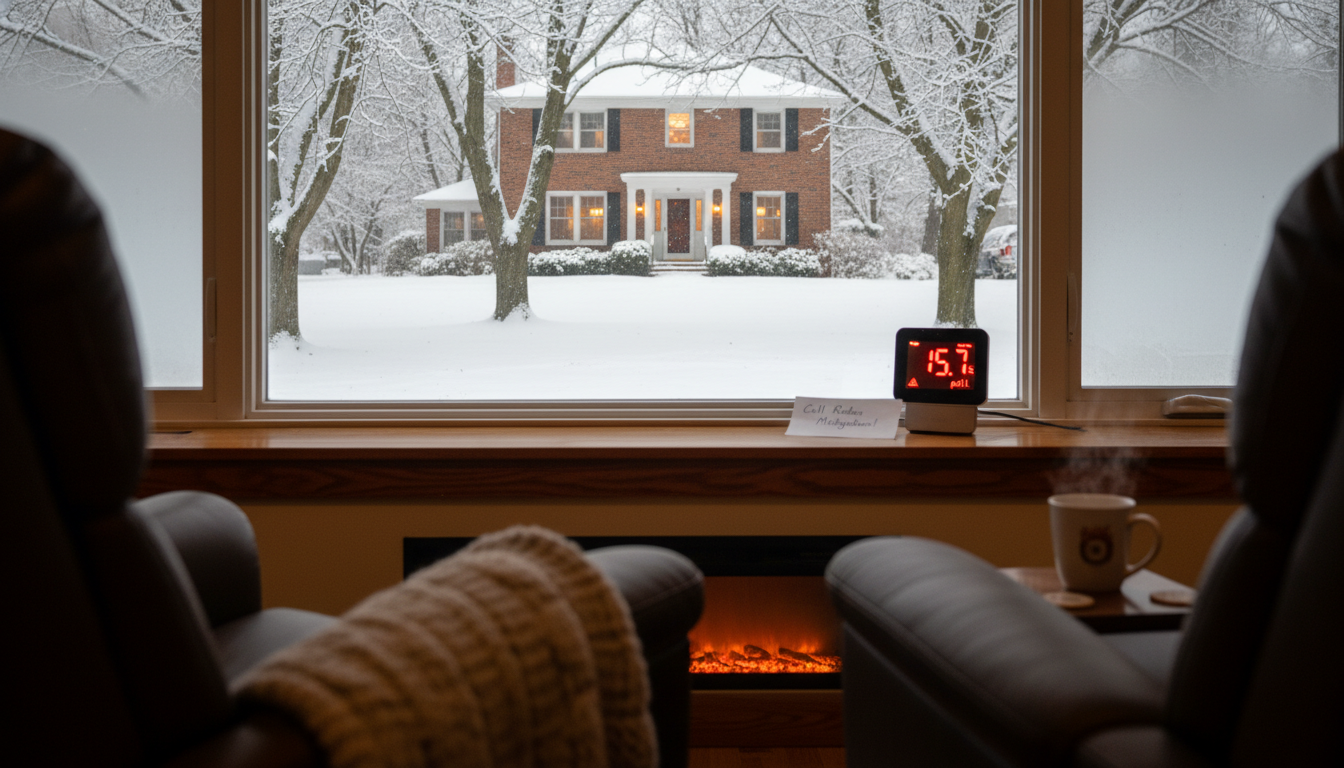
Winter radon levels in Columbus can run significantly higher than in other seasons, with research showing cold-weather readings often 20 to 40 percent greater due to closed-up homes and powerful stack effects that pull radon in from the soil.
Why Winter Radon Levels Rise Across Columbus
In winter, Columbus homes are sealed tight against the cold, which sharply reduces natural ventilation and lets radon accumulate indoors. Heating systems also create a stack effect that pulls soil gases into basements and lower levels, often leading to higher radon readings than in milder seasons.
How Cold Weather Changes Your Home's Airflow
Warm indoor air rises and escapes through your attic and upper floors, which pulls replacement air from the lowest parts of the home. Cracks in slabs, sump pits, and gaps around utility lines become entry points in winter, feeding radon into basements and crawl spaces.
Columbus Soil and EPA Radon Zone 1
Columbus sits on uranium-rich shale and clay soils that naturally generate more radon, and winter conditions simply trap more of that gas inside. Because Franklin County is in EPA Radon Zone 1, more homes cross the 4.0 pCi/L action level when tested during December through February. Learn more about professional radon testing options.
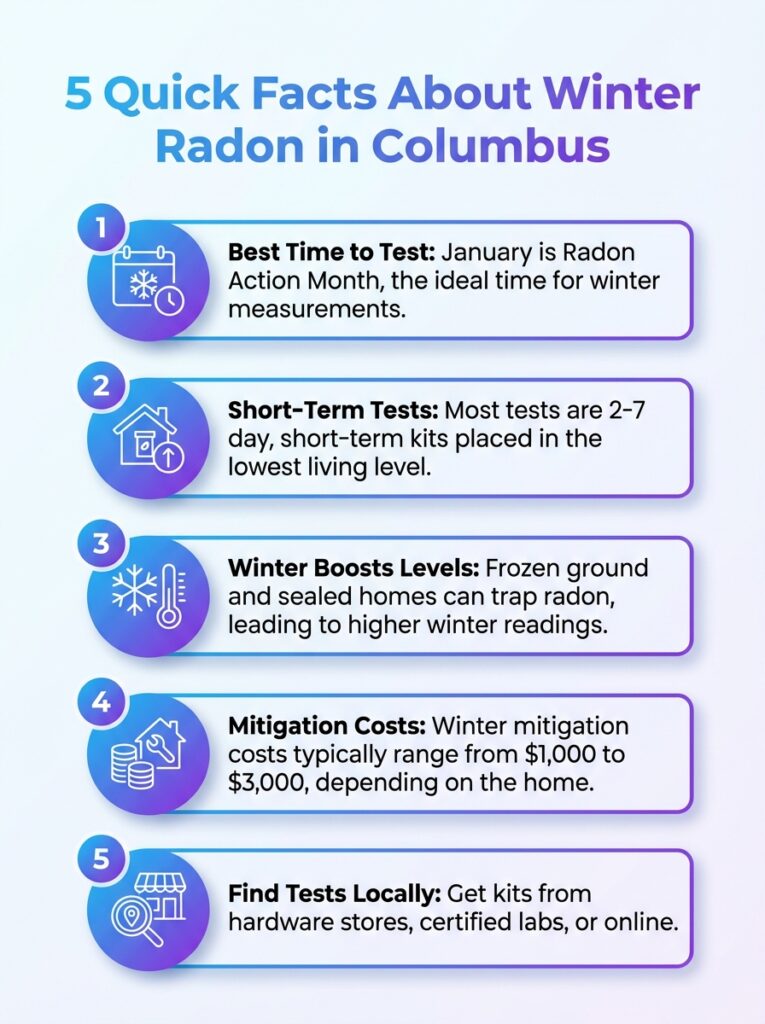
Columbus Radon Numbers: How Winter Readings Compare
Ohio's average indoor radon level is around 7.8 pCi/L, several times higher than the typical U.S. indoor average of about 1.3 pCi/L. In Franklin County, private test aggregators report average indoor readings near 6 pCi/L, and winter tests often come back higher than that baseline.
EPA Action Level in Winter
The EPA recommends mitigation when a home tests at or above 4.0 pCi/L, and many Columbus basements exceed that during cold months. Winter results sometimes surprise homeowners whose summer or fall test kits showed lower values, which is why we encourage at least one cold-season test.
Short-Term vs Long-Term Winter Testing
Short-term tests (2 to 7 days) can quickly confirm if your winter radon level is above the action threshold. Long-term tests (90+ days), especially when started in winter, give a more complete picture that includes multiple heating and mild-weather cycles.
Winter Radon Testing Options for Columbus Homeowners
Columbus residents have several winter testing options, from free DIY kits to professional continuous monitoring. Our goal is to help you match the right option to your home, budget, and timeline.
Free and Low-Cost Winter Test Kits
Ohio's indoor radon program periodically offers free mail-order kits, which many Columbus homeowners use during January Radon Awareness Month. Some local campaigns also provide a $0 radon test kit during Columbus Radon Action Month, making winter the most affordable time to check your levels.
When to Choose Professional Winter Testing
Professional, NRPP-certified testing is especially helpful if you need detailed reports for a real estate transaction or are confirming previous high readings. We typically deploy continuous monitors for 48 to 72 hours in winter, which captures overnight and daytime variations while your heating system runs.
Using the Columbus Library Radon Monitor Program in Winter
The Columbus Metropolitan Library's radon monitor lending program is one of the easiest ways to see real-time levels in your home. All branches participate, so most Columbus residents are within a short drive of a free continuous monitor they can borrow for several days.
Why Continuous Monitors Are Helpful in Cold Months
Continuous monitors show how nighttime inversions, deep freezes, and snow cover can temporarily push radon spikes even higher than daytime averages. This data lets us decide whether a mitigation system, additional sealing, or follow-up testing in another season is the best next step.
Winter Radon Levels in Wealthy Columbus Neighborhoods
High winter radon levels are not limited to older or lower-priced properties. We routinely see elevated results in Dublin, New Albany, Upper Arlington, and Bexley. Premium homes often have larger footprints, complex foundations, and extensive basements, which can create more entry points for soil gas in winter.
Affluent neighborhoods still sit on the same Central Ohio geology that puts so much of Franklin County in Zone 1. When cold weather locks windows and doors shut, even new luxury builds can show winter radon levels that surprise their owners.
Winter Radon Mitigation Costs for Columbus Homes
If your winter test shows elevated radon, the next step is understanding what a mitigation system typically costs in Columbus.
Typical Winter System Price Ranges
- Single-point basement system: $1,200 to $1,500
- Crawl space homes: $1,500 to $2,200
- Large or complex foundations: $2,000 to $3,500
What Drives Winter Mitigation Pricing
Key cost factors include foundation type, required fan size, length of exterior piping, and how much sealing we must complete. We also account for permitting, post-mitigation winter testing, and any aesthetic upgrades you request. Learn more about crawl space encapsulation for moisture and radon control.
Long-Term Winter Costs: Fans, Power, and Re-Testing
When you look at winter radon control, consider the full 10-year cost of running and maintaining a system. In Columbus, the 10-year total often falls between $2,775 and $6,200, including installation, power, testing, and periodic repairs.
Annual electricity costs for a continuously running radon fan typically land around $60 to $180 depending on your electric rates and fan size. Turning the fan off to save power in winter defeats the purpose and usually lets radon levels rise again inside the home.
Winter Testing for Columbus Schools and Public Buildings
Winter radon levels matter not only in homes but also in schools, libraries, and workplaces across Columbus. Classrooms are usually occupied with windows closed while heating systems run, making winter testing more representative of everyday conditions.
Community partnerships, like the Columbus library radon monitor program, help residents understand their own winter radon numbers and advocate for testing in shared spaces.
Negotiating Winter Radon Issues During a Columbus Home Sale
Many Columbus home inspections take place in winter, which means radon tests often capture the highest levels a property will see all year. From a buyer's perspective, a winter test shows how the home performs in a worst-case scenario.
Typical Columbus mitigation quotes between $800 and $2,500 provide a concrete number that buyers and sellers can work into purchase agreements. Contact us for a free mitigation estimate.
Practical Winter Radon Checklist for Columbus Residents
- Schedule or perform at least one radon test between December and February
- Place the device on the lowest livable level, away from drafts, exterior walls, and heat sources
- Keep windows and exterior doors closed except for normal entry and exit during the test
- If results are at or above 4.0 pCi/L, request a professional evaluation and written mitigation quote
- After installation, complete a winter post-mitigation test to verify performance
- Save each winter's test report to track patterns year to year