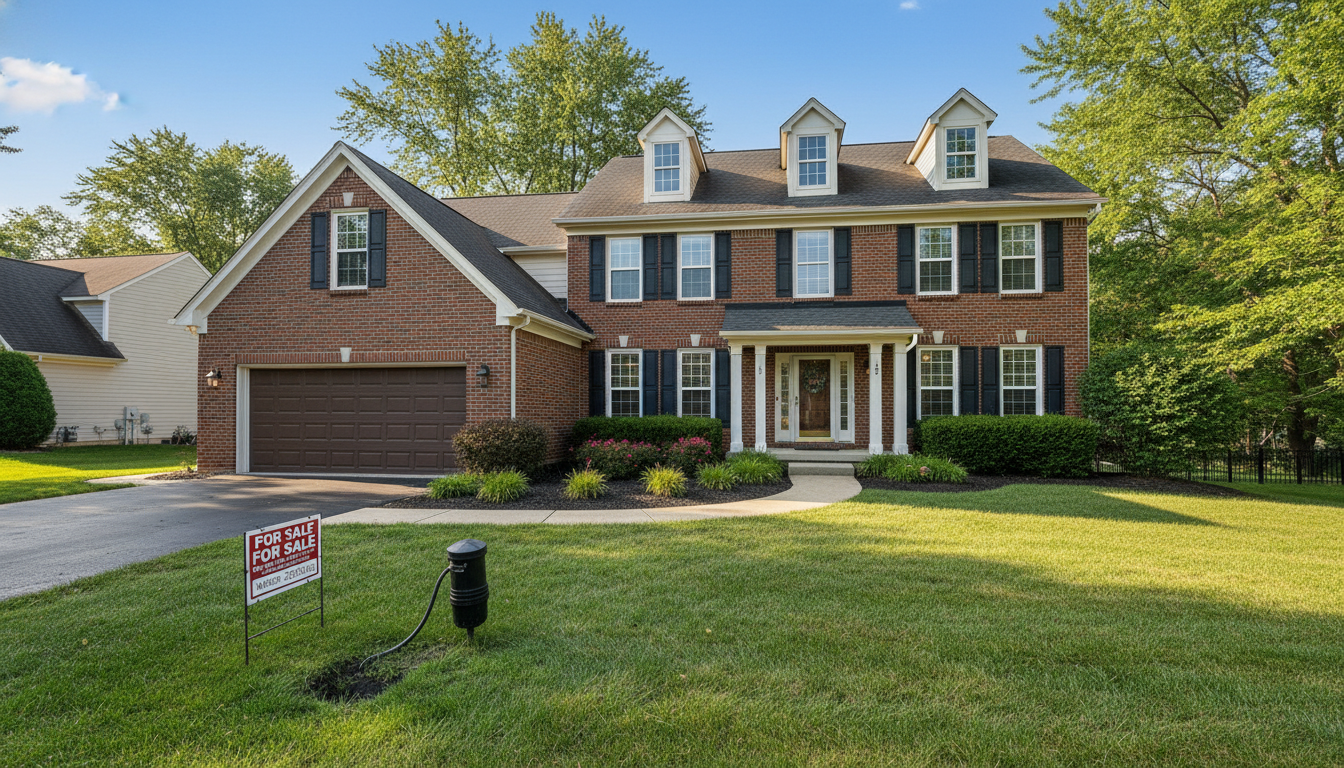
Half of Ohio homes -- about 2.5 million households -- are estimated to have a radon problem. Pre-listing radon testing in Columbus has become a practical step for many sellers who want a smoother, more predictable sale.
Why Pre-Listing Radon Testing Matters in Columbus Real Estate
Franklin County, which includes much of Columbus, is classified as EPA Radon Zone 1, meaning homes here are more likely to show elevated levels than in many other parts of the country. For sellers, that higher background risk makes a pre-listing radon test less of a luxury and more of a smart planning step.
Local Buyer Expectations Around Radon
Many Columbus buyers now treat radon testing as standard, similar to a home inspection or termite check. If you test before listing, you can present recent, clear results instead of waiting for a buyer to raise concerns late in the contract period.
How Pre-Listing Testing Protects Your Sale Timeline
When elevated radon shows up during a buyer's inspection, it often triggers a round of negotiations, contractor quotes, and scheduling that pushes closing out by 2 to 4 weeks. By testing early and planning mitigation on your own schedule, you give yourself more control over timing.
Why Columbus Geology Makes Early Testing Smart
Columbus sits on soil and rock formations that allow radon gas to move up into homes through cracks, sump pits, and gaps around utilities. This geology affects homes in every price range -- from starter homes to custom builds in Dublin or New Albany.
Short-Term vs. Long-Term Radon Tests Before You List
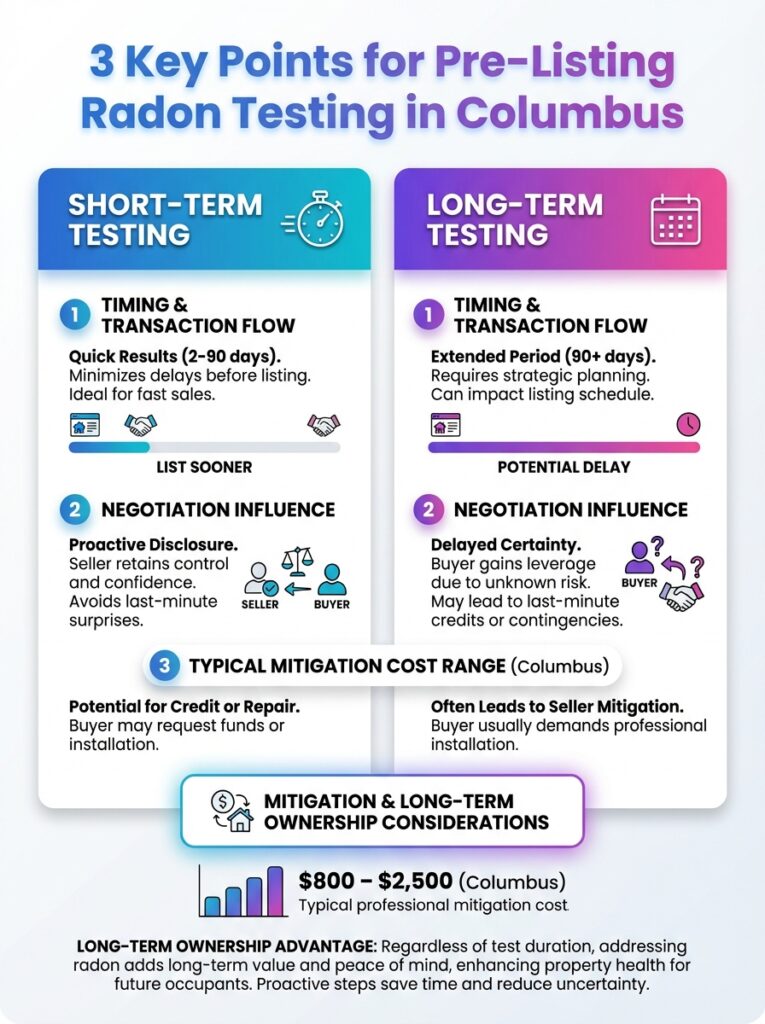
Across the country, about 98% of radon tests are short-term, yet long-term testing can be valuable if you have several months before you plan to sell.
Short-Term Testing for Real Estate Timelines
Short-term radon tests typically run from 2 to 7 days in practice. If you expect to list in the next month or two, a properly placed short-term test under closed-house conditions will usually give you what you need for listing and negotiation.
When Long-Term Radon Testing Makes Sense
Long-term tests run for more than 90 days and are better at capturing how your radon level changes with weather and seasons. These can be especially helpful if a short-term test comes back near the 4.0 pCi/L benchmark or if you are planning to list next year rather than next month.
Using Pre-Listing Results to Plan Mitigation Decisions
If your short-term result clearly exceeds common action levels, most sellers either price the home with mitigation in mind or install a system proactively. When results are borderline, talking through options with a radon professional can help you decide whether to test again, wait for a buyer's test, or plan a system now.
Low-Cost and Free Radon Testing Options in Columbus
Not every Columbus seller wants to invest in professional monitoring right away. There are free and low-cost resources already available in Ohio.
Ohio's Free Charcoal Test Kit Programs
From 2016 through October 2025, Ohio distributed more than 71,000 free radon test kits -- but that is only about 1.4% of the state's roughly 4.9 million households. That limited reach means many Columbus homes have never been tested, and a free kit is a simple way for sellers to fill that gap before listing.
Columbus Library Radon Monitor Borrowing
The Columbus Metropolitan Library system lets cardholders borrow continuous radon monitors much like checking out a book. These devices provide hour-by-hour readings, which can be easier to interpret than a single charcoal kit result when you are preparing for a sale.
Combining Free Tools with Professional Guidance
We recommend using a free kit or library monitor first, then sharing those results with a qualified radon professional if anything looks elevated or inconsistent. This layered approach saves money while still providing the expert guidance you need for real estate decisions.
Best Time of Year for a Pre-Listing Radon Test in Columbus
Radon levels in Columbus homes can change with weather, ventilation habits, and heating patterns, so timing your pre-listing test matters.
Winter Testing Advantages
During Columbus winters, homes are closed up and heating systems often create a stack effect that can draw more soil gas inside. January and February are widely recommended months if you want to capture a higher-end snapshot of what your home might experience.
Spring and Summer Testing
If you plan to list in spring or summer, it still makes sense to test as soon as you know you will sell, even if conditions are not at peak winter levels. An early result gives you time to plan mitigation or pricing before photos and showings begin.
Using Timing to Your Negotiation Advantage
When you test early in a season with stable indoor conditions, you can present your results to buyers as part of a clear, documented listing package. That preparation shortens conversations with buyers and agents later because you have already addressed the "have you tested for radon" question with data.
Reading Your Pre-Listing Radon Results
In practice, many buyers and inspectors in Columbus use 4.0 pCi/L as the point where they begin asking about mitigation. Results well below that value usually give sellers more peace of mind that radon will not become a major negotiation point.
If Your Pre-Listing Test Is Elevated
When a pre-listing test shows a higher level, you essentially have three choices:
- Install mitigation before listing and market your home as "radon addressed"
- Plan to credit the buyer at closing for their preferred contractor
- Price the home with radon work already factored in
Each approach can work, and the best choice depends on your budget, timeline, and how competitive your local submarket is.
How Pre-Listing Testing Shapes Negotiations with Buyers
In Ohio, sellers must disclose known radon test results on the Residential Property Disclosure Form. Pre-listing testing gives you information you are expected to share anyway -- the advantage is you learn it early. Read more about Ohio radon disclosure requirements.
Setting Expectations in the Listing Description
If your pre-listing test comes back at an acceptable level, highlight "recent radon test on file" in your listing remarks. That simple line reassures buyers that you have paid attention to a common Columbus concern.
Planning for Mitigation Credits or Installation
If your numbers are higher, decide whether to install mitigation before listing or offer a specific credit amount. Base those credits on realistic system costs rather than guesses -- we can help with accurate local pricing.
Reducing Back-and-Forth During Inspection
When both you and the buyer know the radon situation upfront, there is less room for surprise requests or rushed decision-making. That clarity usually leads to smoother negotiations and helps protect your closing date. See our guide to radon negotiation in Columbus for more tactics.
Radon Mitigation Costs Columbus Sellers Should Expect
Pre-listing testing sometimes uncovers higher radon levels, and the next logical question is what mitigation might cost.
Typical Columbus Mitigation Price Ranges
Most standard radon mitigation systems fall between $800 and $2,500, with many average basement homes landing around $1,200 to $1,800. The exact price depends on your foundation type, home size, and how easily the vent piping and fan can be routed.
Cost Differences by Foundation Type
- Basement and slab homes: $1,200 -- $2,000
- Crawl space systems: $1,500 -- $2,500 (may require additional sealing or encapsulation)
- Hybrid / multi-foundation: $2,000 -- $3,500
Long-Term Cost Considerations
Beyond installation, there are modest ongoing costs like electricity for the fan and occasional monitoring. Over a 10-year period, total ownership costs can fall in the $2,800 to $4,200 range, which is helpful context if a buyer asks about future expenses.
Comparing Radon Companies Before You List
Once you know you may need mitigation, pre-listing is often the best time to compare local quotes and choose a company you trust.
Recent quote comparisons in the area show many homeowners paying between $1,200 and $2,500 for complete systems. When reviewing bids, look at whether permits, post-mitigation testing, exterior appearance, and warranty coverage are included.
Financing Mitigation When Cash Is Tight
Some Columbus radon companies offer payment plans that spread system costs over 12 to 18 months, with example payments in the $110 to $210 per month range depending on project size.
Common Pre-Listing Testing Mistakes to Avoid
- Improper test placement: Tests placed too close to drafts, exterior walls, or heating vents can produce misleading results.
- Poor house conditions: Leaving windows open or running whole-house fans during a short-term test distorts readings.
- Relying on a single quick DIY test: A one-time DIY test does not guarantee future readings will look the same. Be open to follow-up testing.
- Not documenting your process: Keep records of where the test was placed, how long it ran, and the report you received. This prevents unnecessary re-testing debates with buyers.
Pre-Listing Strategy for Different Columbus Neighborhoods
High-Value Suburbs
In wealthier suburbs like Dublin, New Albany, and Westerville, buyers often arrive with detailed inspection expectations. Having a recent pre-listing radon test and a documented mitigation plan can be a strong selling point.
Older Homes Closer to Downtown
In established neighborhoods with older foundations and additions, pay extra attention to test placement and potential for multiple suction points for mitigation.
Newer Construction and Spec Homes
Some newer homes include passive radon systems or stubs that can be upgraded with a fan, which often keeps mitigation costs toward the lower end. We still recommend testing, since even newer builds in Zone 1 areas can show a wide range of radon levels.